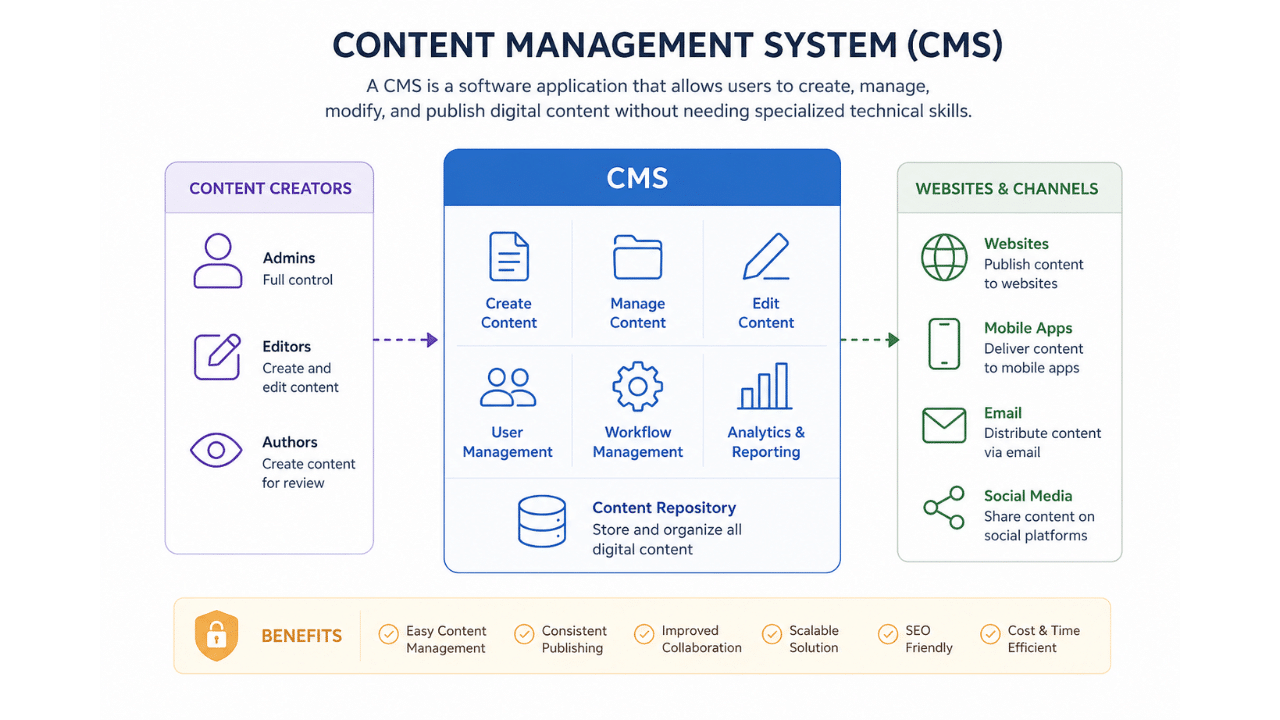
If you build a content management system, you’re not just shipping software — you’re shipping a tool that handles everything a customer publishes. That puts CMS companies under three different kinds of regulatory pressure at once: accessibility law, data privacy rules, and security audits. Miss any one of them, and it’s not just your problem anymore — it becomes your customer’s problem too.
The Accessibility Deadline
This one isn’t theoretical. In 2024, the Department of Justice finalized a rule under Title II of the ADA requiring state and local government entities — public universities, school districts, city websites, all of it — to meet WCAG 2.1 Level AA. The deadline for larger entities (populations over 50,000) is April 24, 2026. Smaller entities and special districts get until April 2027.
The rule specifically targets the platforms behind these websites, not just the websites themselves, which means CMS and LMS vendors selling into government or education are on the hook, whether they like it or not. Level AA isn’t a soft target either — it requires meeting all 50 Level A success criteria plus 20 more at Level AA, covering whether content can be perceived, operated, understood, and built to hold up across assistive technology.
In practice, that means a CMS needs accessible editing interfaces, sensible defaults for alt text and heading structure, color-contrast checks baked into the publishing flow, and, ideally, automated scanning so customers aren’t catching problems after launch. A lot of vendors are also producing VPATs (Voluntary Product Accessibility Template) now — basically a documented accessibility scorecard — because customers in regulated sectors need that paperwork to clear their own compliance reviews. WCAG itself isn’t standing still either; the W3C expects WCAG 2.2 to become the formal ISO standard sometime later in 2026, so this isn’t a box you check once.
Privacy: It’s Not Just A Policy Page
A CMS holds far more personal data than people tend to assume — including form submissions, comments, user accounts, and behavioral analytics. Under GDPR, that makes a CMS vendor a data processor, and Article 12 specifically requires being upfront with people about how their data gets used. That obligation doesn’t stay with the customer who installed the CMS — it runs straight through to the vendor’s architecture.
So real privacy compliance here looks less like a privacy policy and more like actual functionality: consent management tools, the ability to find and delete a specific person’s data on request, audit trails that show who touched what, and a data processing agreement that customers can actually sign and rely on.
Security: SOC 2
Ask anyone buying enterprise software in 2026, and they’ll tell you the same thing — no SOC 2 report, no deal. SOC 2 audits measure a vendor against the AICPA’s Trust Services Criteria: security, availability, processing integrity, confidentiality, and privacy. Security is the only one that’s mandatory, but most serious vendors carry several.
What buyers really want is the Type II version, which checks whether your controls actually held up over six to twelve months — not just whether they looked good on the day of the audit. Progress Software’s Sitefinity CMS is a decent example of mature security practices in this space: its SOC 2 report covers security, availability, and confidentiality, and it’s backed by measures such as routine vulnerability scanning, mandatory code reviews against OWASP standards, and encrypted data in transit. Going into 2026, auditors are also expecting more from vendor and supply-chain oversight — continuous monitoring, zero-trust access, and proof that any third-party services a CMS relies on are being monitored as well, not just assumed to be fine.
The Takeaway
None of these three things — accessibility, privacy, security — work as a one-time certificate you frame and forget about. They’re closer to ongoing product requirements: templates that are re-audited, data flows that are reviewed, and controls that are re-attested every year. The CMS companies that handle this well aren’t the ones scrambling before an audit. They’re the ones that can hand a customer a VPAT, a current SOC 2 report, and a real DPA without missing a beat — because at this point, that paperwork is part of the sale.

Leave a Reply